The Sahrawi NGO Alliance submits a written contribution to the Working Group on Enforced or Involuntary Disappearances (WGEID), addressing the application of universal criminal jurisdiction within the North African context, with a specific focus on the situation in Algeria and the Tindouf camps.
The report conceptualizes universal jurisdiction as the competence of national courts to prosecute perpetrators of specific crimes, irrespective of the locus delicti (place of commission) or the nationality of the perpetrator or victim. This formulation relies on the Princeton Principles, which define the scope of such jurisdiction based exclusively on the nature of the crime. This principle constitutes a significant advancement in combating impunity for serious international crimes, including enforced disappearances.
In the Algerian context, the report documents the escalation of gross human rights violations since the 1990s, a period wherein the country witnessed a widespread wave of enforced disappearances and extrajudicial executions following the military coup. The report highlights how the 2006 Charter for Peace and National Reconciliation undermined justice by criminalizing public discourse regarding these grave violations, thereby denying thousands of families access to truth and justice.
The report sheds light on legislative deficiencies in Algeria regarding the harmonization of national laws with international standards. Notably, Algeria has not ratified the International Convention for the Protection of All Persons from Enforced Disappearance (ICPPED), despite having signed it in 2007. Furthermore, national legislation lacks provisions establishing universal criminal jurisdiction for investigating international crimes, fails to provide for command responsibility regarding such crimes, and establishes no specialized unit for the investigation of enforced disappearances.
The report emphasizes the urgent need to remove impediments to the exercise of universal criminal jurisdiction. This includes ratifying the relevant International Convention, abolishing amnesty laws and statutes of limitations for crimes of enforced disappearance, ensuring the jurisdiction of ordinary courts rather than military tribunals over these cases, and lifting immunity for perpetrators.
Finally, the report addresses the situation in the Sahrawi camps in Tindouf, documenting enforced disappearances committed by Algerian military forces and Polisario security elements, amidst a media blackout that prevents the monitoring of these violations. The report concludes by recommending that Algeria adopt the necessary legislative measures to domesticate and exercise universal jurisdiction over crimes of enforced disappearance, and to end the policy of impunity that deprives victims of their right to effective remedy.
More Articles
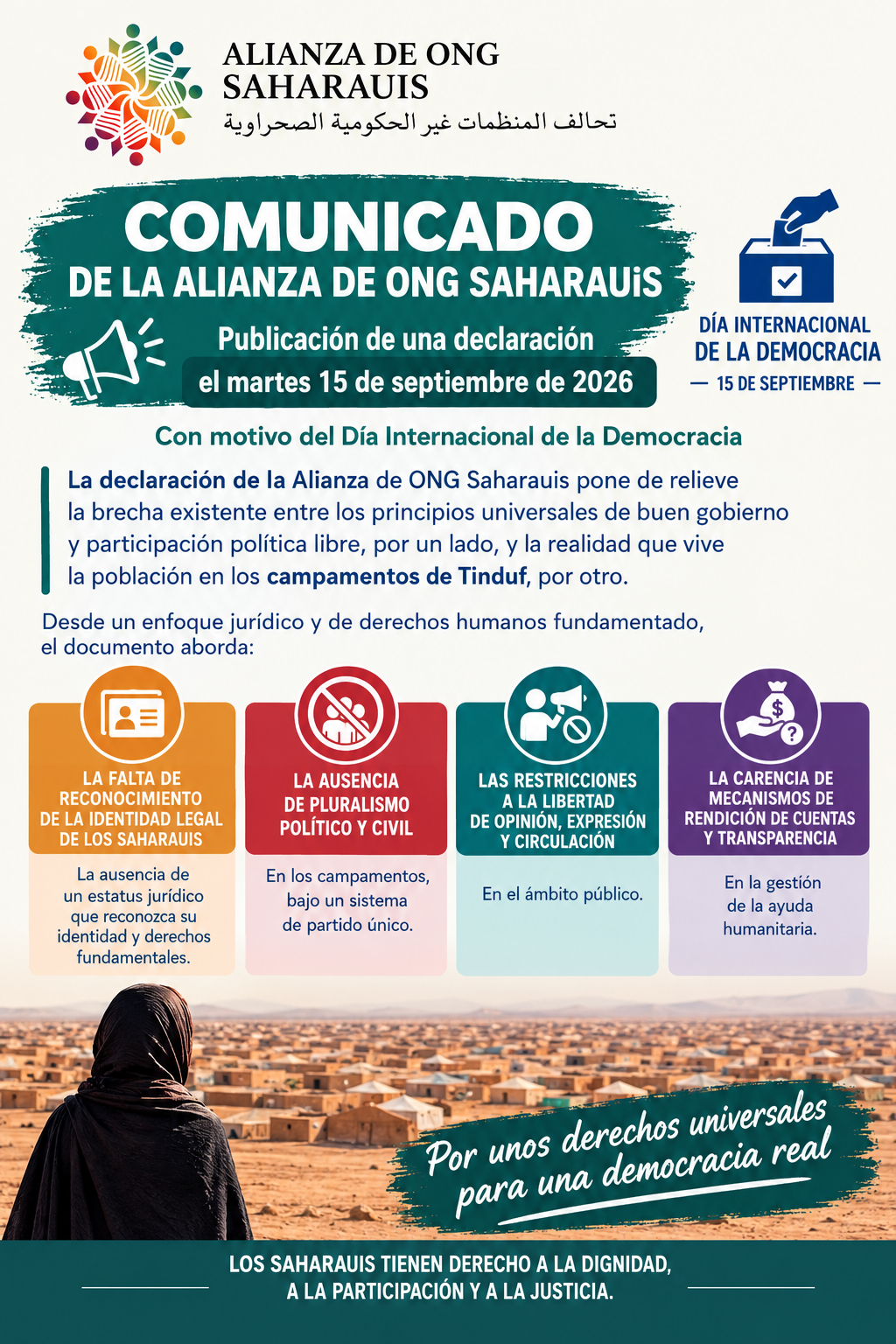
Declaración de la Alianza de ONG Saharauis con motivo del Día Internacional de la Democracia
Con motivo del Día Internacional de la Democracia, la Alianza de ONGs saharauis denuncia la persiste...
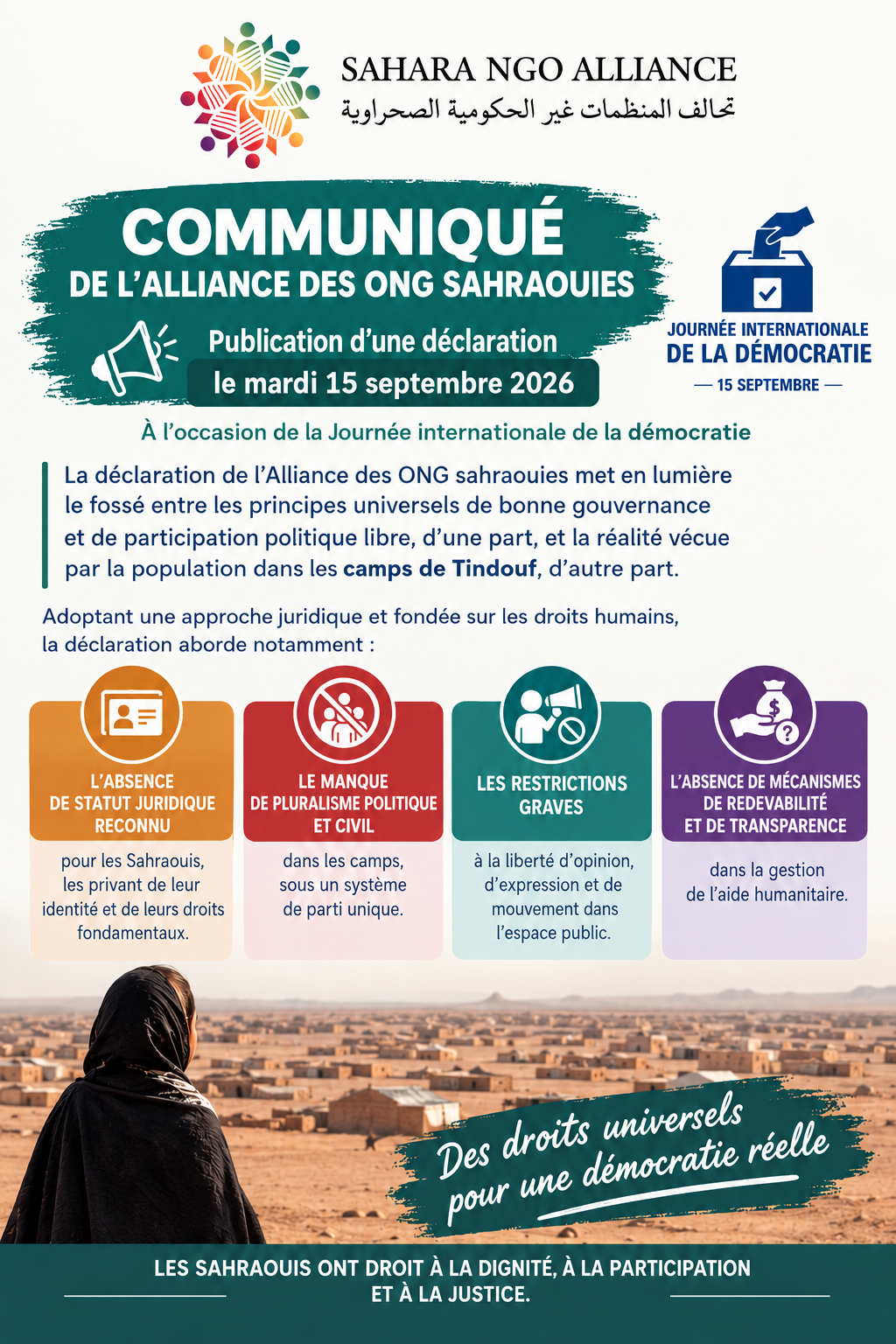
Déclaration de l'Alliance des ONG sahraouies à l'occasion de la Journée internationale de la démocratie
À l'occasion de la Journée internationale de la démocratie, l'Alliance des ONG sahraouies dénonce l'...
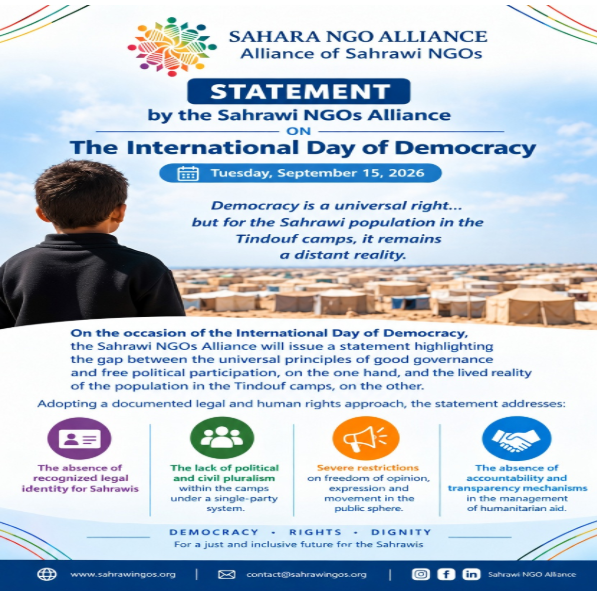
Statement of the Sahrawi NGOs Alliance on the Occasion of the International Day of Democracy
On the International Day of Democracy, the Sahrawi NGOs Alliance denounces the persistent absence, i...