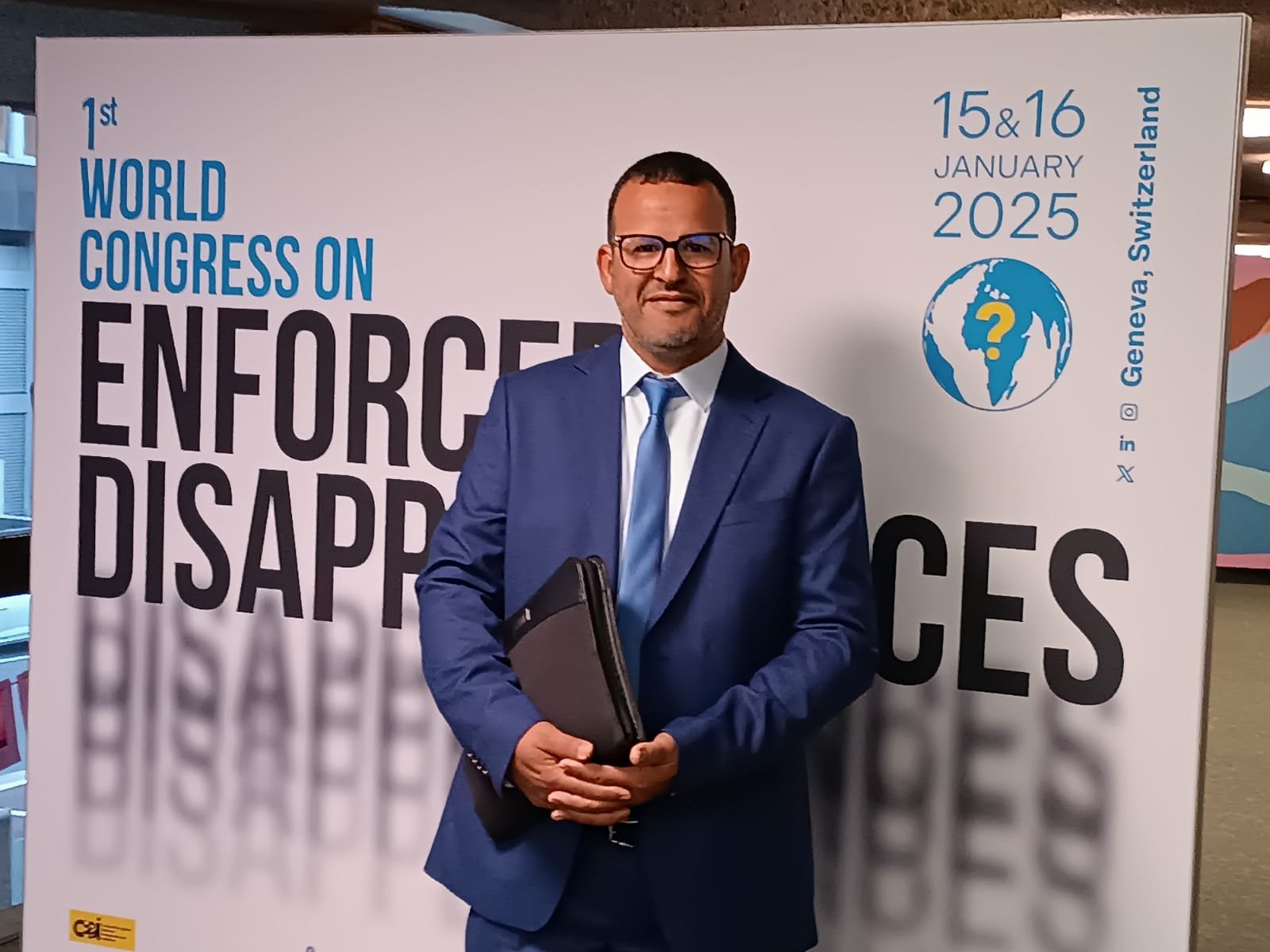
This report constitutes a written contribution submitted by the Sahrawi NGOs Alliance to the World Congress on Enforced Disappearances and the Committee on Enforced Disappearances (CED). It examines the legal and human rights challenges associated with the crime of enforced disappearance in Algeria in general, and within the Tindouf camps in particular.
The report diagnoses the human rights situation in Algeria based on the following points:
1. Systematic Nature of Enforced Disappearance: The report documents the Algerian authorities' use of enforced disappearance as an instrument of political repression since independence. This practice escalated significantly during the "Black Decade," constituting systematic and continuous violations.
2. Entrenchment of Impunity: The report criticizes Ordinance No. 06-01 regarding the Charter for Peace and National Reconciliation, arguing that it established a policy of impunity and protection for perpetrators. This stands in contradiction to the norms of international law, which prohibit amnesty for grave crimes.
3. Deficiency in International Cooperation: The report notes Algeria's reluctance to cooperate with UN mechanisms, particularly the Human Rights Committee, and its failure to ratify the International Convention for the Protection of All Persons from Enforced Disappearance (ICPPED) despite signing it in 2007. This impedes the path of transitional justice and genuine national reconciliation.
Furthermore, the report focuses on the anomalous situation in the Tindouf camps, highlighting the following violations:
1. Delegation of Jurisdiction: The report condemns the Algerian State (the host country) for abdicating its judicial, legal, and administrative jurisdiction to a non-state military organization (the Polisario Front). This creates a legal vacuum that deprives victims of international protection and of the refugee status guaranteed under the 1951 Convention.
2. Grave Violations: The report documents the subjection of Sahrawis to extrajudicial killings, enforced disappearance, and systematic torture based on identity, tribal affiliation, and political opinion, as well as the exploitation of espionage charges to settle tribal scores.
The report concludes with a set of recommendations addressed to the Algerian State and the international community, most notably:
• Legislatively: The necessity of ratifying the International Convention for the Protection of All Persons from Enforced Disappearance and harmonizing national legislation with its provisions.
• Procedurally: Revoking the delegation of jurisdiction to the Polisario Front and restoring the State's legal sovereignty over the camps to ensure effective remedies for victims.
• At the Human Rights Level: Cooperating with UN mechanisms, facilitating visits by the Working Group on Enforced or Involuntary Disappearances (WGEID), and conducting a comprehensive census of the camp population.
Executive Summary on the Reality of Enforced Disappearance in the Tindouf Camps